Norway’s oil and gas output to peak before 2030
25 August 2026
Without significant discoveries, production on the Norwegian continental shelf (NCS) may fall steeply after 2030, according to the Resource Report 2026 by the Norwegian Offshore Directorate.
Large developments—such as the Johan Sverdrup field—that attracted high investment in recent years are now coming to an end, while new discoveries and projects are mostly of smaller size.
The Norwegian oil and gas output has now reached a plateau that is expected to last through around 2027, and then the production is predicted to decline, according to the resource report.
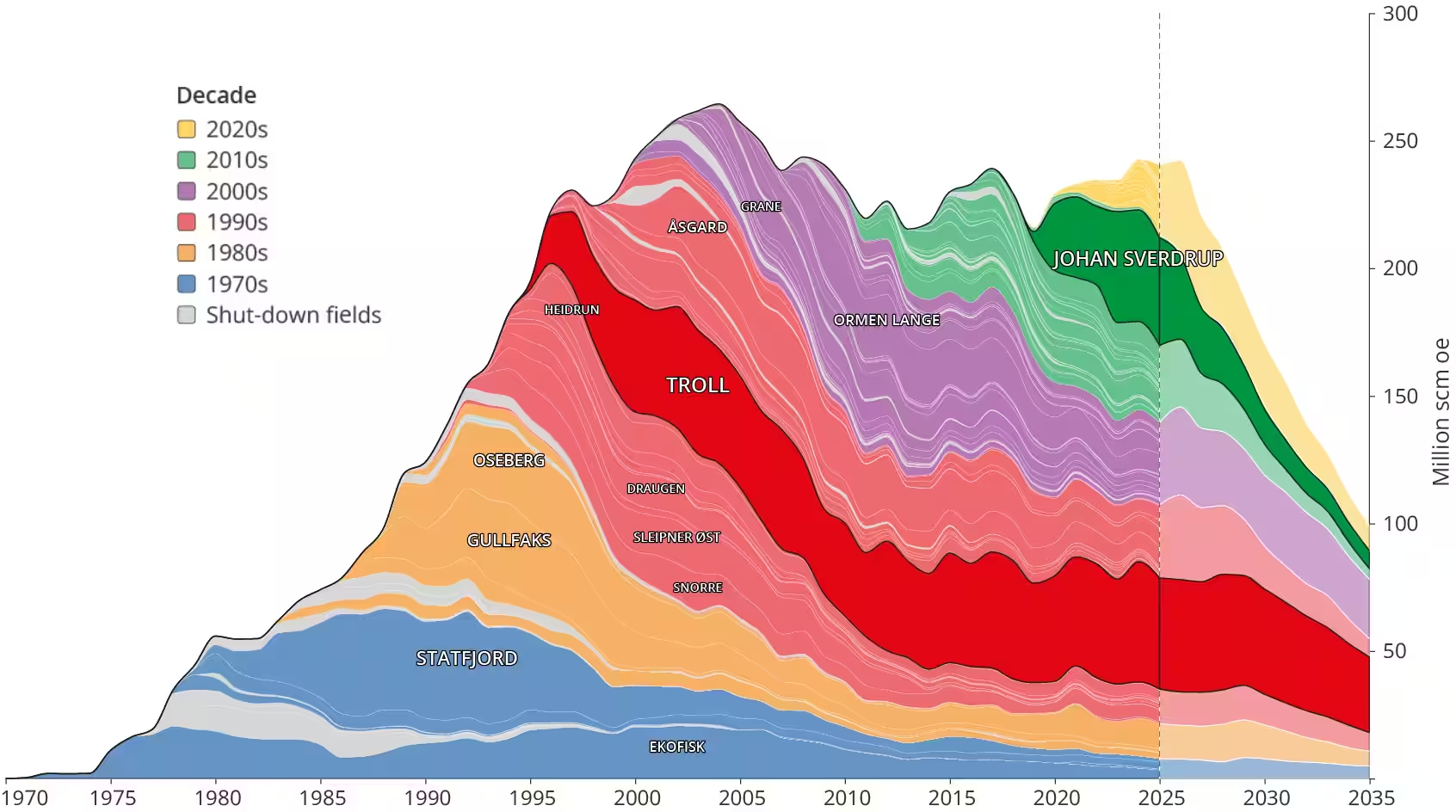
(Source: Norwegian Offshore Directorate)
The resource report outlines three possible outcomes for production up to 2050, with all three scenarios showing a decline over time. The pace of decline depends on exploration, technology, investments, swifter development of discoveries, and development and utilization of infrastructure.
In the High scenario, production in 2050 could equate to approximately two-thirds of current levels. In the Low scenario, production in 2050 could plummet to almost zero.
The three scenarios are not symmetrical, the report states. Without concerted effort, developments are more likely to drift towards the Low level. Keeping production at the Base level or High level requires “robust willingness to invest, steady exploration activity and continuous technology investments throughout the entire period to be realized.”
Large areas of the Barents Sea in the Arctic Ocean remain underexplored and have the largest resource potential remaining on the NCS. More mapping and further exploration are required to establish whether they can be developed—according to the report.
Source: Norwegian Offshore Directorate