ExxonMobil releases Global Outlook through 2050
26 February 2026
ExxonMobil released its Global Outlook, projecting that global oil demand will remain above 100 million barrels per day (mb/d) through 2050 and even under the average of IPCC Likely Below 2°C scenarios, oil demand still comes to 65 mb/d in 2050—about two thirds of current consumption. The Outlook has been presented as part of the company’s financial results for 2025.
The Outlook shows oil production declines at a rate of about 15% per year. At that rate, in the absence of continued investment, by 2030 oil supplies would fall from 100 mb/d to less than 50 million barrels—about half the output needed to meet demand.
Limiting investment to only existing fields would slow the decline to about 4%; however, this would still be well below the oil demand in the average of IPCC Likely Below 2°C scenarios. The following charts also show the 2050 oil and gas demand projections by the three scenarios (STEPS, APS, NZE) in the IEA World Energy Outlook 2025.
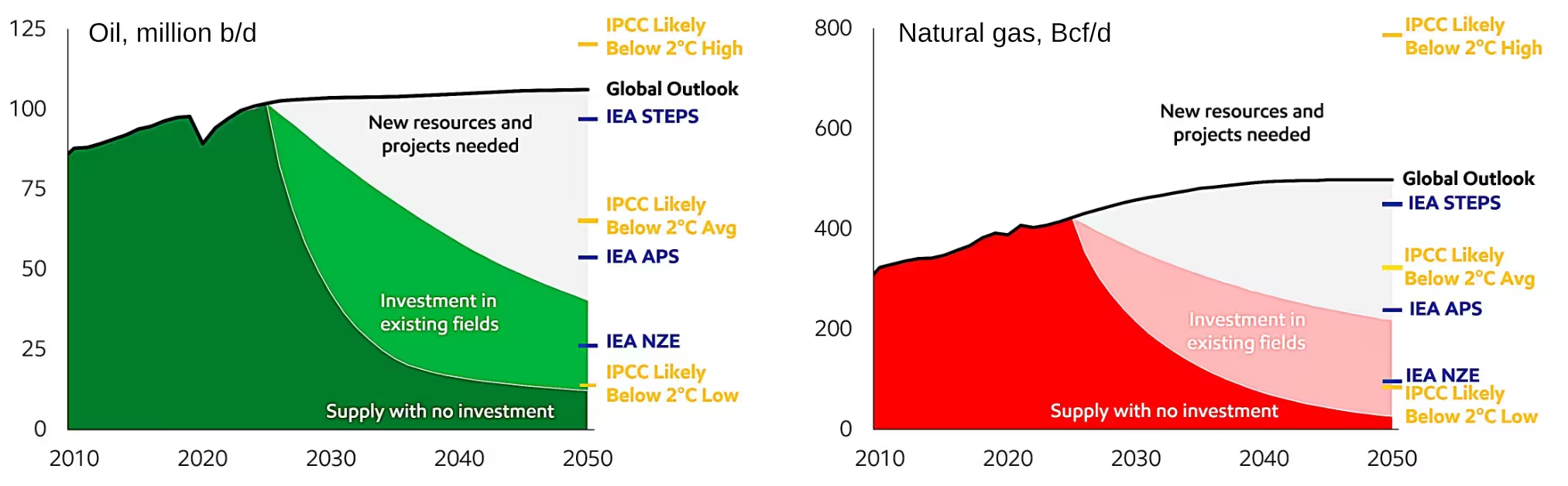
Oil = total liquids excluding biofuels. Natural gas figures exclude flaring.
(Source: ExxonMobil)
The natural decline rate of oil fields of 15%, shown by Exxon, is much higher than the last year’s estimate of about 8% by the IEA. The increasing trend in the decline rates oil fields is in part caused by the increasing output from unconventional resources that decline faster than conventional oil wells. Without investment, total oil production from US shale resources could decline by about 35% within one year, with some wells showing initial decline rates as high as 70%.
ExxonMobil anticipates that the world’s available oil and gas resource base will grow to meet the projected demand. While advancements in technology and efficiency are expected to increase output from existing fields, as industry production from mature fields is declining, it must be offset by investments to generate production from new discoveries. “The investments to develop and supply resources to meet global demand through 2050 will be significant and would be needed to meet even rapidly declining demand for oil and gas envisioned in aggressive decarbonization scenarios,” according to the ExxonMobil Outlook.
However, new oil and gas discoveries have been on a declining trend for several decades, as shown by Rystad Energy. The new oil and gas projects in Brazil, Guyana, and the Gulf of Mexico have been discovered more than 10 years ago. Except for some more recent discoveries in Namibia, there are very few remaining undeveloped projects. In addition, global exploration expenditures have declined to about $50 - $60 billion per year, down from a peak of around $115 billion in 2013.
Source: ExxonMobil