Conference report: 47th International Vienna Motor Symposium
26 May 2026
The 47th International Vienna Motor Symposium was held April 22-24, 2026. A “Virtual Event” option was offered again this year. Virtual attendees could access the symposium material after the Symposium concluded. Topics covered included new engine concepts and emission reduction, driveline technologies, powertrain electrification, hybrid technologies, fuels, hydrogen storage technologies, fuel cell technologies, and hydrogen engines. The Symposium was attended by about 1,000 guests from more than 20 nations. There were 100 presentations and about 50 exhibitors.
Please log in to view the full version of this article (subscription required).
Diesel Engines
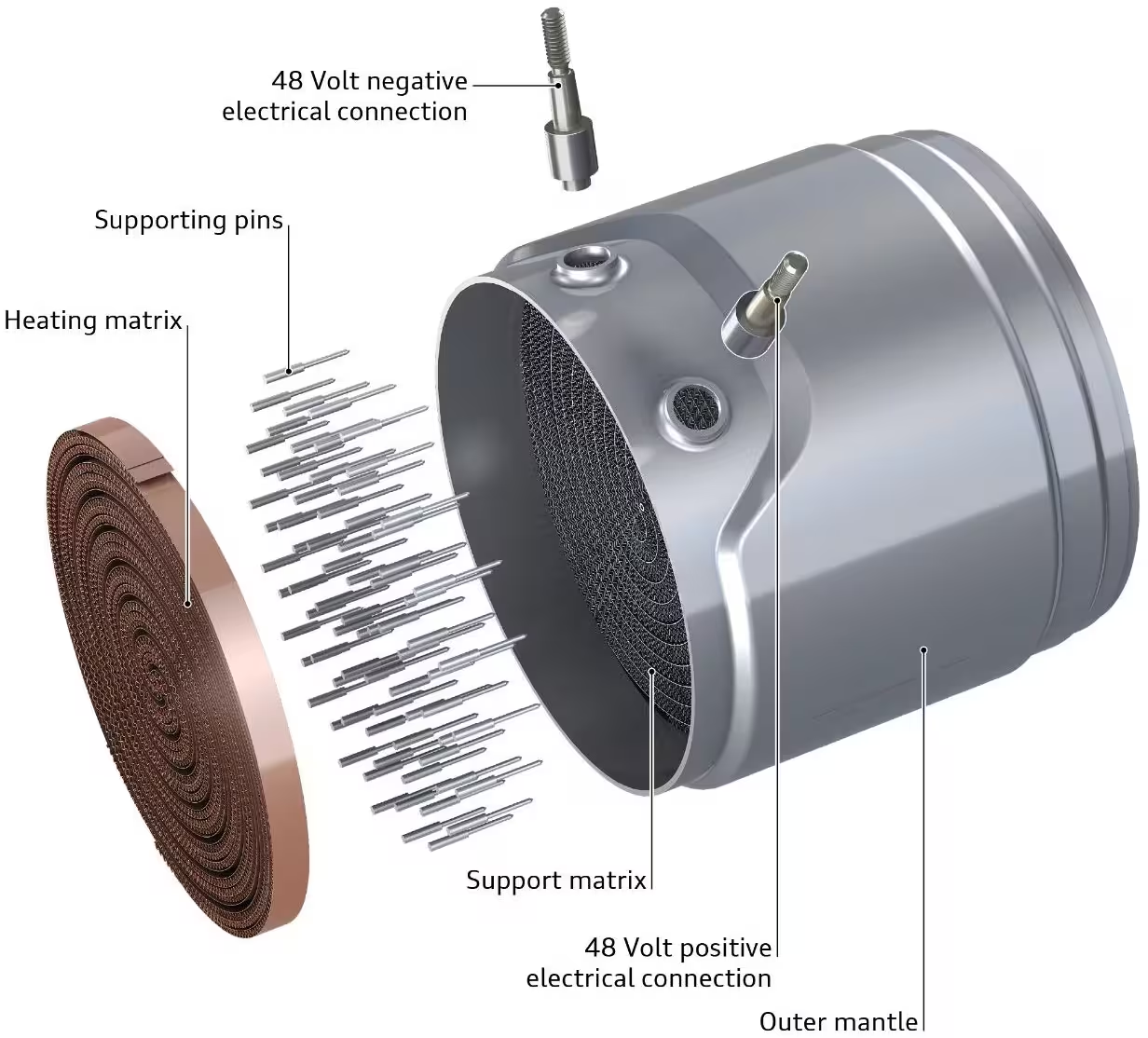
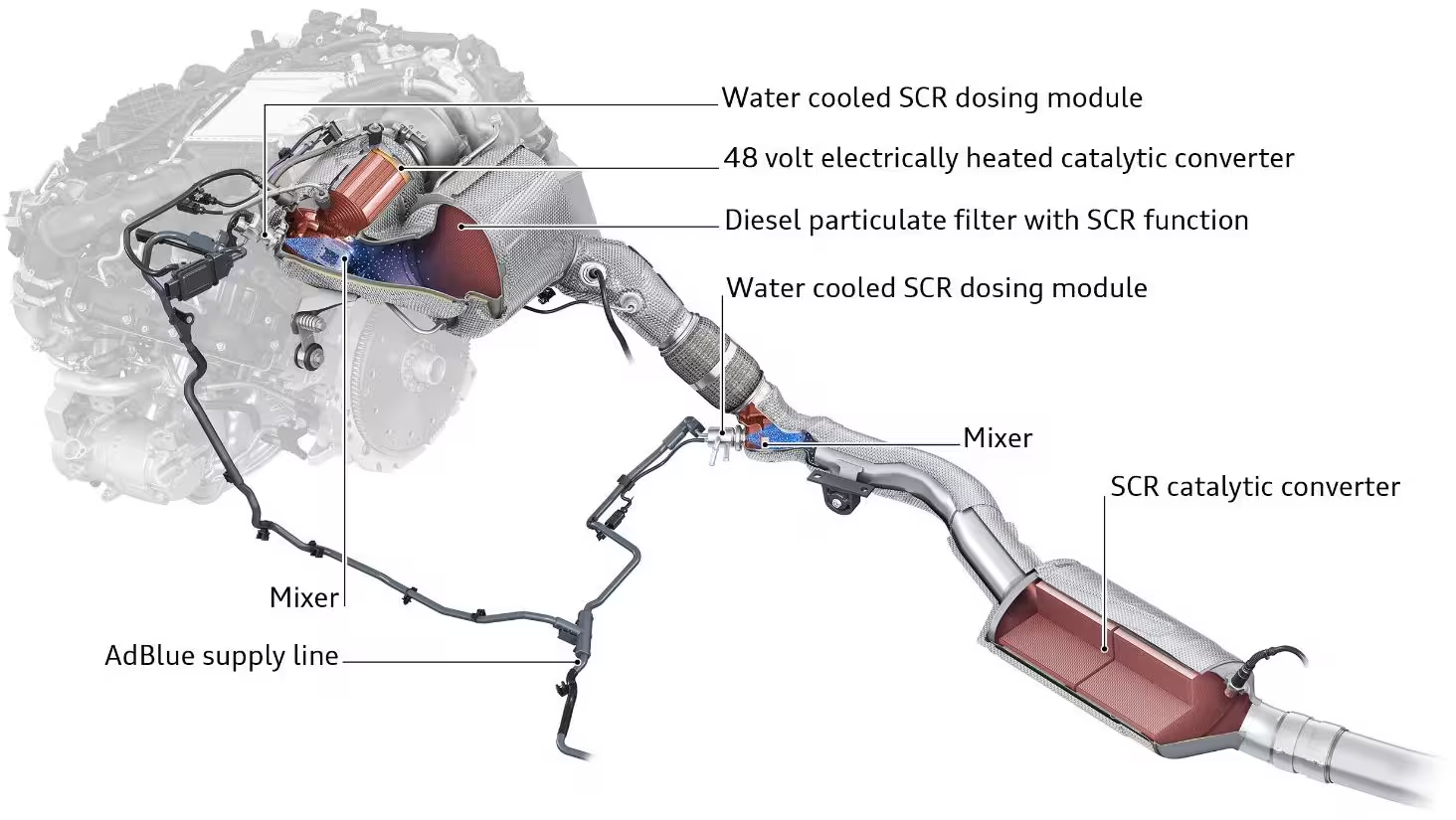
Audi’s updated vehicle models that use conventional and hybrid powertrains are based on their Premium Platform Combustion (PPC). This includes the R4 TFSI for the Chinese market, the R4 TDI and V6 TDI for the European market and the V6 TFSI Power-Hybrid as the high-performance engine designed for the RS segment. Details of the R4 and V6 TFSI were discussed in 2024. The new generation V6 TDI (EA897evo4) produces 220 kW/580 Nm, a minimum fuel consumption of 204 g/kWh—4% lower than the previous generation engine and has been optimized for the PPC’s 48 V MHEV plus powertrain. It includes an efficiency-optimized turbocharging system with a 48V electric compressor (EPC). The aftertreatment system uses an electric heater positioned upstream of the DOC using metal support pins, Figure 1. Heater power levels exceeding 5 kW are possible. The E-DOC is used during cold starts, and whenever the exhaust gas temperature drops below a defined limit such as during overrun operation or extended periods of electric driving. A dual dosing SCR system is used with the first SCR catalyst coated onto the DPF (SCRF) and ASC functionality coated onto the outlet of the underfloor SCR catalyst, Figure 2. A close-coupled low pressure EGR system allows fast EGR control and use of EGR across the entire engine map as well as during cold starts. In an A6 application, CO2 levels of 140 g/km over the WLTC are achieved compared to 166 g/km for the previous generation TDI engine [6750][6751].
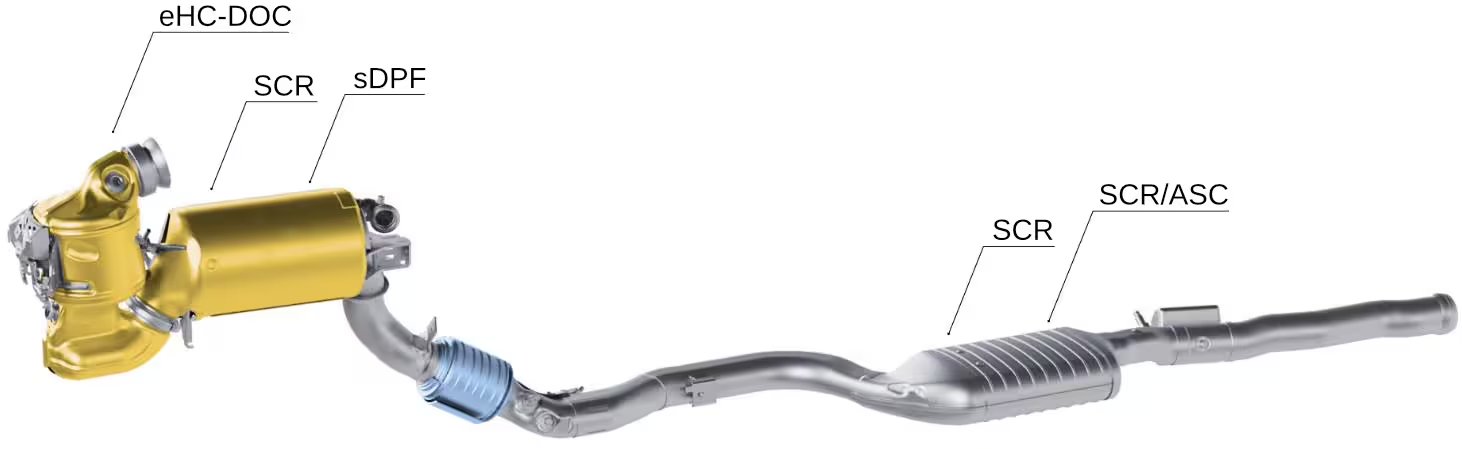
Mercedes-Benz outlined its Family of Modular Engines (FAME) for hybrid powertrains ranging from 48 V hybrids to high voltage PHEVs. This family of engines includes stoichiometric gasoline engines such as the M 252, M 254 EVO, M 256 EVO and M177 EVO as well as the OM 654 EVO and OM 656 EVO diesel engines. The OM 656 EVO uses an electrically heated DOC similar to the one in Figure 1 as well as a dual dosing SCR system, Figure 3. The zeolite properties of the closed-coupled SCR catalyst were adapted to enable higher NH3 fill levels while reducing NH3 slip. The coating in the sDPF was optimized to reduce backpressure. The surface area of the underfloor SCR catalyst was increased to improve NOx reduction at high engine loads and an ASC coating was integrated into its rear section. The electrically heated DOC allows the NSC and variable valve timing mechanism as well as many of the engine-based exhaust gas thermal management strategies used in the previous generation engine to be dispensed with. During cold starts, a low-NOx combustion process with maximized EGR can be used while the eHC operates at maximum power to heat the exhaust gas aftertreatment system. During normal combustion, the eHC ensures a constant minimum temperature in the exhaust system while in some extreme driving situations, it avoids the need to activate a low-NOx combustion process. It also allows optimized DPF regeneration control supported by the metallic substrate in the DOC and targeted engine loading via the ISG. This extends regeneration intervals and improves regeneration performance. The result is an increase in thermodynamic efficiency of approximately 1.7% for light-duty applications and about 1.0% for commercial vehicle applications. Tailpipe NOx emissions are significantly reduced, especially in low-load driving conditions where reductions of over 70% are possible [6752][6753].
Gasoline Engines
VW has developed a new series-parallel full hybrid drive for the T-Rov and Golf that will also be used in other models. Incorporated into this drive is the 1.5-litre TSI evo2 engine optimized for series-parallel application. The engine is also used in the PHEV2 platform. For the series-parallel application, intake valve timing opening profile has been optimized to reduce knocking tendency and allow an increase in the compression ratio to 12.5:1 and raise peak BTE to 39.5% [6754].
Horse Powertrain’s Aurobay division has updated the BHE15 hybrid-dedicated 1.5L gasoline engine for Euro 7/China 6b. The updated stoichiometric engine (BHE15 EVO with 100 kW/225 Nm) achieves a 43.5% BTE that is a 2% improvement over the previous version and delivers a 5.1% reduction in vehicle fuel consumption. Technologies include a 15.5 compression ratio, long stroke (S/B=1.39), strong Miller cycle, low-pressure EGR, a “Flow Master” combustion system with enhanced tumble flow and turbulence level, multiple friction-reduction measures and a high-efficiency turbocharger [6755]. For range extender applications, Horse Powertrain has developed the C15 Range Extender in naturally aspirated (69 kW) and turbocharged (120 kW) variants [6756].
Engine Technologies
The mechanical Atkinson cycle, in which a trigon link and two rotating shafts are used to yield a higher expansion ratio than compression ratio, is considered as an option to enable engines for hybrid vehicles to reach thermal efficiencies close to 50%. In one example by AVL and Chery Group for a range extender application, a mechanical Atkinson cycle engine (25.5:1 expansion ratio.17:1 compression ratio) combined with aggressive Miller valve timing, high external EGR rates and efficient boosting demonstrated 48% BTE with stoichiometric combustion [6760]. Switching to lean combustion with an active prechamber and an e-turbo is expected to yield at 50% BTE. In another example, FEV suggested that 50% BTE could be achieved with a stoichiometric mechanical Atkinson cycle engine combined with turbocharging improvements [6761]. In both cases, a baseline engine with 43-44% BTE was used.
Current superalloys used in turbochargers, such as alloy 718 and Nimonic C‑263, have solvus temperatures below 900°C that limit engine exhaust temperatures to a maximum of about 800°C and therefore limit potential efficiency gains through turbocharger developments. VDM Metals identified two new superalloys, C-264 and C-295, that have solvus temperatures of about 950°C and 1000°C respectively that could enable exhaust temperatures over 950°C. The enhanced mechanical properties of C-295 come at the expense of slightly reduced oxidation resistance compared to C-264 [6762].
Emission Regulations
MAN and TRATON compared EU Stage V and the USA EPA Tier 4 nonroad standards with a focus on development, validation and documentation differences. One big difference is the PN limit in Stage V but not part of Tier 4 that leads to different aftertreatment system designs. Another big difference is the European In Service Monitoring (ISM) requirements and the U.S. Deterioration Factor (DF) validation requirements that lead to two very different and complex verification processes. Another is the difference between EU NRMM categories and the US engine families that makes it difficult to plan development, validation and certification processes consistently [6766].
Emitec reviewed the China 7 proposal and its impact on catalyst performance requirements. One challenging test that is proposed is a Type IV test at extended temperature and altitude. Meeting this test at 1°C is expected to be challenging because of the 1.1 conformity factor for temperatures of 1°C and higher that makes it critical to achieve a rapid catalyst light-off. For lower temperatures, the conformity factor increases to 1.6 [6767].
Hydrogen and Other Alternative Fuels
As with several recent conferences, there were many hydrogen engine papers. These included:
- a 60% BTE Argon power cycle engine using hydrogen HPDI developed by AVL and TRATON [6768],
- a summary of Cummins X15H engine development using a diesel derived aftertreatment system with SCR and particle filter for Euro VII applications and an electric heater ahead of an SCR catalyst and no particle filter for EPA 2027 applications [6769],
- a lean burn Euro 7 LCV hydrogen engine based on a V6 3.5 L turbocharged gasoline engine by Toyota [6770],
- a comparison of PFI and low-pressure DI technologies by Bosch on a heavy-duty 13-liter FPT engine that showed the DI system having improved transient response at low speeds and the potential for higher torque [6771],
- an investigation of a combined injection and ignition system (HydroFit) for stationary engines [6772],
- a dual mode direct injector by Schaeffler that can adapt the spray pattern to the operating point by switching between jet flow and Coanda flow depending on injector pressure, cylinder pressure, and needle lift that lowers NOx compared to conventional direct injectors [6773],
- the identification of measures that can produce a well-mixed fuel and air mixture in a DI hydrogen engine by Toyota [6774], and
- a study by Graz University of Technology showing that a longer injection duration (lower rail pressure) in a PFI engine improves homogeneity, reduces rich pockets and lowers combustion anomaly occurrences [6775].
* * *
The 48th International Vienna Motor Symposium is scheduled to take place on April 21-23, 2027 in Vienna, Austria.
Conference website: wiener-motorensymposium.at